Showing posts with label Reading Guide. Show all posts

Saturday, January 27, 2018

#13: Books


"What an astonishing thing a book is. It is a flat object made from a tree with flexible parts, on which are imprinted lots of funny dark squiggles. But one glance at it and you're inside the mind of another person. [...] Writing is perhaps the greatest of human inventions, binding together people who never knew each other, citizens of distant epochs. Books break the shackles of time. Books are proof that humans are capable of working magic." Carl Sagan
Despite the advice writers get to journal, I was never able to engage regularly in the practice, especially in regards to my day-to-day life. I tend to be the person who is so exhausted at the end of the day that I fall asleep almost as soon as my head hits the pillow. Reflecting on and documenting my rather mundane life as the warning light on my personal battery begins to flash is an exercise in futility. I am lucky to get a few pages of reading in before my brain turns out the lights.

However, I have been able to keep two long-term journals of a different sort. One is a journal of quotes and poems I have collected over the years. Naturally, I organize them around a single word which encapsulates the theme of the quote or the gist of the poem. The second journal is a list, beginning in the millennium, of all the books I have read, including date of completion, title and author. To be clear, the list only includes books I have read from cover to cover. I mention this because I read prolifically elsewhere as well, particularly articles in newspapers, magazines, periodicals, and online sources. Further, I have had to work hard over the years to give myself permission to stop a book I began that didn't grab me. This may be due in part to my obsessive, perfectionist personality and in part to my years as a graduate student, who had to plow through stacks of obligatory reading -- personal interests be dammed! Somehow I always struggled to sacrifice the time already invested and set a book aside midstream.


Recently, I took the time to look more closely at the list of books I have read over eighteen years. I was inspired after reading the following from a Philip Roth interview in the New York Times:
C.M. What have you been reading lately?
P.R. I seem to have veered off course lately and read a heterogeneous collection of books. I’ve read three books by Ta-Nehisi Coates, the most telling from a literary point of view, “The Beautiful Struggle,” his memoir of the boyhood challenge from his father. From reading Coates I learned about Nell Irvin Painter’s provocatively titled compendium “The History of White People.” Painter sent me back to American history, to Edmund Morgan’s “American Slavery, American Freedom,” a big scholarly history of what Morgan calls “the marriage of slavery and freedom” as it existed in early Virginia. Reading Morgan led me circuitously to reading the essays of Teju Cole, though not before my making a major swerve by reading Stephen Greenblatt’s “The Swerve,” about the circumstances of the 15th-century discovery of the manuscript of Lucretius’ subversive “On the Nature of Things.” This led to my tackling some of Lucretius’ long poem, written sometime in the first century B.C.E., in a prose translation by A. E. Stallings. From there I went on to read Greenblatt’s book about “how Shakespeare became Shakespeare,” “Will in the World.” How in the midst of all this I came to read and enjoy Bruce Springsteen’s autobiography, “Born to Run,” I can’t explain other than to say that part of the pleasure of now having so much time at my disposal to read whatever comes my way invites unpremeditated surprises.
Don't you love the way Roth recounts what he has been reading like a series of clues he uncovered or a journey, where one piece of reading led to another. Sometimes, he veered off course and meandered through an unexpected text. Other times, one book simply peaked his curiosity in another author or pushed him to explore a topic further; one book taught him something and directed him to learn more. Roth beautifully exemplifies how books are magical landscapes for the inquisitive mind.

Looking back on my reading list, anyone could discern that I have a penchant for female writers, memoir, and poetry. One would know that I became a parent, knew grief and often sought the company of those who write and garden and prepare food. The list includes periods of time when I sought inspiration or explored gratitude or deeply reflected on nature along with those who formally and informally study its workings. No one could say I only read the latest novels to top the bestseller lists in any given year, but one would know that I dabbled in serious works of fiction along with those much lighter in essence, particularly in the summer. I am grateful for this archive, a reminder of how one's life in the world intertwines with one's life of the mind. 


One of the first books I remember owning was a hard back picture book compilation of Grimms' Fairy Tales, including Rapunzel, Rumpelstiltskin, The Goose Girl, and Jorinde and Joringel that I received from my aunt at Christmas. I was in elementary school and certainly read other books I owned or borrowed regularly from the library, but this book remains with me to this very day as the first log in my memory's reading list. I can still see some of the illustrations very clearly in my mind and remember poring over it repeatedly. Here began my journey as an independent reader which has led over the years to the book I just finished last night, Hourglass by Dani Shapiro. So many books in between are forgotten, particularly before I began my formal reading journal, but the magical journey continues just the same: one book at a time read with great pleasure.

Saturday, July 22, 2017

History


I double majored in German and history -- not German history, although I did take European history courses. I then went on to earn a masters in education as well as my secondary school teaching certification in social studies and German. Education was a logical extension for a liberal arts education, but I have always struggled to explain how I landed on history as a major. After all, I did apply to college thinking I would major in chemistry and become a physician. And, I certainly am not a history buff like my brother, who I remember plowing through thick tomes on wars and leaders and eras long gone just for fun even as an adolescent.

In some way, I often think that children of immigrants tend to have a penchant for history. Our parents speak of times and places and movements long gone that shape the way they approach their new home and parent us. I heard about WWII and Germany and fascism that cultivated a deep gratitude for what American offered in the second half of the 20th century. Working hard was expected, although questions about the past were often ignored. We waited for bits and pieces of information to fall into our laps while eavesdropping on adult conversations to explain tears and tirades and religious fervor and convoluted decision making.

Lately, I have been immersing myself in history once again. In the current political climate, I have found that looking back has helped me make sense of the present. Please don't think that I always find comfort in some worrisome conclusions that history can uncover, but I find that understanding often is the first step to positive action and nothing could be more useful in these times. Let me share three journeys into history you might find enlightening and enjoyable as well:

1) My husband and I have been watching the National Geographic series Genius about Albert Einstein. The series places Einstein in historical, political, and cultural context such that you not only learn about the man but also how he was shaped by the times which do have some parallels to today.

2) I have been listening to the podcast Revisionist History by Malcolm Gladwell. Each episode looks back at a person or idea or event: "Something overlooked. Something misunderstood." As I am cooking dinner, I turn on the podcast. It gets me thinking, deeply, such that I return to its content in my mind repeatedly in the days that follow, making connections to my own experiences, understanding of current events, and passionate pursuits.

3) I am reading On Tyranny by Timothy Snyder. A straightforward, short book of 20 chapters, it looks at current political times through the lens of our Founding Fathers and European totalitarianism of the last century. Please do not take this to be a book of one political persuasion or another. Rather, this is a book about the basis for democracy and freedom and our responsibility as citizens to protect the foundation and integrity of our nation.

What I love most about immersing myself in history like this is the connections I am making. These mediums are lighting the light bulbs in my brain, helping me through the dis-ease I am feeling since the last election, and directing my thinking and decisions for the future as a voter, community member, and citizen. Of course, historians know that this is the greatest value of their academic pursuits: the past may illuminate the present and direct the future for one individual or an entire nation. Personally, I invite you to join me in the pursuit. As such, we might have greater confidence in where we collectively take our country.

History
Andrew Gent

Every poem has been written before
at least fifteen times.
Every song
sung better.

The Neanderthals discovered caves
already painted with the story of their lives.
They invented fire
over and over again.

And you & I
whisper the same sweet nothings

we were born with.

Wednesday, November 19, 2014

Reexamination

Fortunately, life sometimes offers us the opportunity for a second look, the time to pause and reexamine, review, or rethink a few things. No need to get too set in one's ways or forgo the opportunity to learn or try something new. Here are a few of the second glances I have taken recently:
The vine climbing the old oak right in front of the house had the most beautiful fall foliage again this year.
When the leaves were well past their prime, browned and brittle, I noticed for the first time that the vine produces a berry in autumn, well hidden beneath the color until the leaves give way.
I took a closer look and realized I had never noticed them before even though they were right outside my front door for two years.
I love that nature never fails to surprise and teach and provide.
I am also rethinking Thanksgiving dinner. Our house will be quiet this year, a gift after an incredibly busy fall. I plan to pare down what we prepare to the essentials: a small, stuffed turkey, mashed potatoes, sides, rolls, and pumpkin pie. I am even thinking of buying the gravy at a local butcher. The goal will be to increase down time and fun with my immediate family by reducing the work load considerably. I have to recommend Thanksgiving by Sam Sifton to anyone reexamining their holiday cooking or anyone interested in a concise read with all the necessary information to prepare the meal successfully.

Finally, with a substantial amount of entertaining ahead at NOLD throughout October, I wanted to try a healthier version of the standard artichoke dip with a mayo base. You know the one. I love artichokes and wanted to find a savory dip more complex in flavor. I hit the jackpot and here it is -- out with the old standard and in with the new. This reexamination is worth a second look on your part, too. Enjoy it this holiday season.

Artichoke Fondue Dip

1 14-ounce can brined artichoke hearts, drained and chopped
1 cup shredded Parmesan cheese
1 cup shredded aged Gouda Cheese
½ cup heavy cream
3 tablespoons dry white wine
1 tablespoon chopped fresh Italian flat-leaf parsley
2 teaspoons cornstarch
Fine sea salt and ground black pepper, to taste
  1. In a medium bowl, thoroughly combine ingredients.
  2. Pour into a 9-inch, shallow baking dish.
  3. Bake at 325°F for 35 to 40 minutes, or until lightly browned on edges.
  4. Serve with baguette slices or crackers of choice.
Yield: 2 cups dip

Adapted from The New Midwestern Table by Amy Thielen

Sunday, August 31, 2014

Applause

Coming Home at Twilight in Late Summer
Jane Kenyon


We turned into the drive,
and gravel flew up from the tires
like sparks from a fire. So much
to be done—the unpacking, the mail
and papers ... the grass needed mowing ....
We climbed stiffly out of the car.
The shut-off engine ticked as it cooled.

And then we noticed the pear tree,
the limbs so heavy with fruit
they nearly touched the ground.
We went out to the meadow; our steps
made black holes in the grass;
and we each took a pear,
and ate, and were grateful.


After a quick turnaround, my family and I went from several weeks of travel to ten days of vacation. In Canada, the birds outside woke me on many mornings -- loons, geese, ducks, mourning doves. One morning, our boat happened upon a flock of thousands of shore birds which took flight in our presence. I understood deeply what Heather Lende wrote:
This is what Emerson must have had in mind when he wrote that “the proper response to the world is applause.” (164) Take Good Care of the Garden and the Dogs

I read both of Heather Lende's memoirs while vacationing, If You Lived Here, I'd Know Your Name and Take Good Care of the Garden and the Dogs. I recommend both for their insight into spirituality and humanity as well as life in Alaska. They were thought provoking and reflective which was just what I needed to rejuvenate.

Upon return, Jane Kenyon's poem rang true. Life piled up high and thick while we were gone, but hints of autumn are in the air, and my love affair with the season continues. The earth is laden with fruit for the soul these days. I am reminded to soak it all in as nourishment for the winter days ahead. 


In short order, I had to refill the bird feeder that hangs suspended from the evergreen and provides endless entertainment and joy for me and Freddy, our cat who dreams of the chase from his cat tree. In the process, I could not help but notice that at NOLD the late summer blooms of yellow are giving way to the first bits of autumn red, and I, too, am grateful.


Friday, July 11, 2014

Midwest

Ask a passerby what states make up the Midwestern United States, and you will get a different answer every time. Some will even say that the Midwest includes everything between New York and California except for the deep South. Growing up in Wisconsin, I never really considered North Dakota, South Dakota, Nebraska, Kansas, and Missouri to be part of the Midwest, but I believe they technically are along with Wisconsin, Minnesota, Iowa, Illinois, Indiana, and Michigan.

I only mention the Midwest, because I want to recommend three cookbooks from the Heartland that I own and appreciate. Each contains recipes from a broad range of Midwestern states and would make a wonderful gift singly or as a trio. Practical, beautiful, and interesting reads, you may want to add them to your own collection to turn to repeatedly in the kitchen for inspiration and guidance. New or tried and true, these cookbooks are certainly worth a peek:

 The New Midwestern Table by Amy Thielen
Prairie Home Cooking by Judith M. Fertig

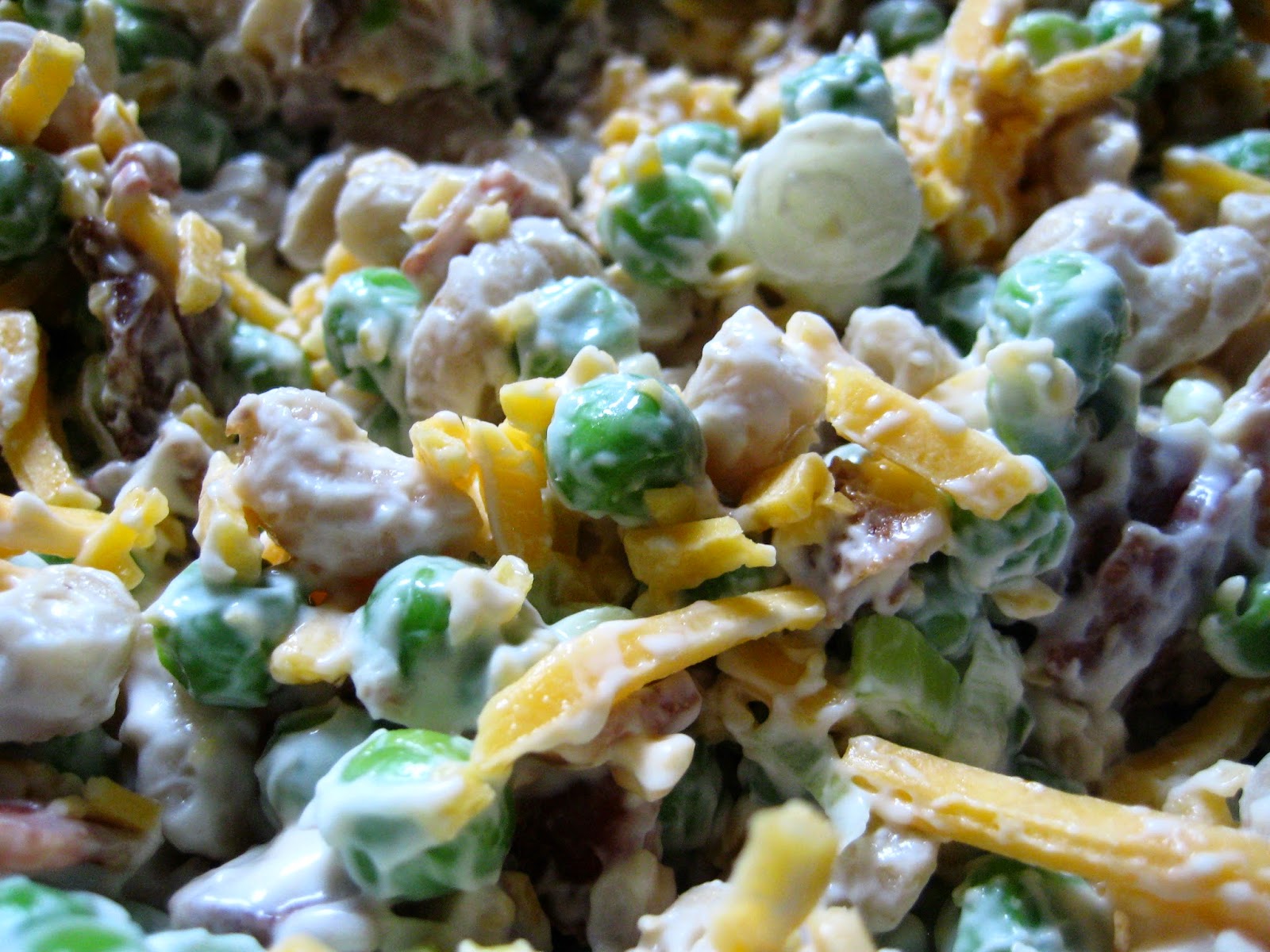
I found a favorite new and easy pea salad in Prairie Home Cooking that I wanted to share. In late spring, our local farm stand carries two cup bags of fresh shelled peas. Exceptionally flavorful and perfect for this salad, these peas are worth buying in bulk and freezing for future use in any number of recipes like this throughout the year.
Use turkey or uncured bacon, whole grain pasta, and well-aged cheddar for nutrients and full flavor.

Iowa Pea Salad

3 strips bacon, fried crisp and crumbled
1/2 cup chopped green onions with some green
2 cups cooked peas, fresh or frozen and thawed
1 cup cooked macaroni
1 cup mayonnaise
1/2 cup shredded cheddar cheese

Combine all ingredients. Chill for at least 2 hours. 

Saturday, June 21, 2014

Starter

One of the staples of my diet as a child was German rye bread -- no caraway seeds. Dense, filling, hearty, and healthy. The thought of this bread, topped with butter and homemade jam, still makes me salivate.
I remember buying rye bread from the German baker, and I remember my aunt baking it in her kitchen. I think this is the reason I have longed to hone my own bread baking skills. Most importantly, I have wanted to come up with a rhythm for bread baking that goes something like this: I bake bread on Mondays from a sourdough starter that makes multiple loaves for the week; then, I feed the starter before returning it to the refrigerator to "sour" in preparation for the next week.
So, when my mother visited in late May, I started an Amish style starter that I found in Prairie Home Cooking by Judith M. Fertig, a recent find at our Friends of the Library sale and shared half the starter and recipes with her to take home. One month later, I am still baking bread, perfecting the recipe and technique.
The cookbook that has taught me the most about baking bread is The River Cottage Bread Handbook by Daniel Stevens. I enjoy all the British River Cottage cookbooks and found the basics of bread baking really made sense in this book, particularly the rudimentary recipe that has numerous variations. Essentially, you need a flour, a liquid, yeast and salt to make bread and may, optionally, add fat, starter, and extras for inside and out. End of story.
In addition to making bread, the sourdough starter can be used to make pancakes and scones from recipes in Prairie Home Cooking which were also delicious. I have had trouble in the past, keeping the starter from going bad. So far,so good, this time around. Here is my basic recipe:

Sourdough Whole Wheat Bread

2 cups sourdough starter
2 cups lukewarm water
3 cups flour

Mix starter, water, and flour in a large bowl and let ferment uncovered on the counter top overnight until very active.

1/4 cup brown sugar
2 tablespoons unsalted butter, at room temperature
1 tablespoon fine salt
2 1/2 teaspoons yeast, proofed in 1/2 cup warm water
4-5 cups whole wheat bread flour

Add and mix in brown sugar, butter, salt, and proofed yeast. Mix in four cups of whole wheat bread flour. Turn out onto a lightly floured surface to knead, adding as much of the remaining one cup of whole wheat bread flour to bring the dough together. It should become smooth and elastic not sticky or tough. I knead for about 8 to 10 minutes. You may let the dough rise once in an oiled bowl until double in size or simply move onto next step.

Shape into two loaves that can be baked free form on a greased baking sheet or in greased loaf pans. Let rise until almost doubled. Be patient for the dough to rise which can vary greatly upon location humidity and temperature.

Slash tops of each loaf with a serrated knife if desired and bake at 375° F  for 35 minutes. For a crisper crust, you may use a baking stone and/or add steam to the oven.

Yield: Two Large Loaves

Start here and begin to vary your ingredients and techniques to find the combinations you find most irresistible. You can find ideas in The River Cottage Bread Handbook and go from there. Join me in bread baking and feel free to share your experience. I love to hear from you, dear reader.
Saturday, June 7, 2014

White

I am trying to think through carefully the footprint I leave in the gardens and lawn on my property, using organic methods and introducing primarily perennial plants that are local, deer resistant, and drought tolerant.

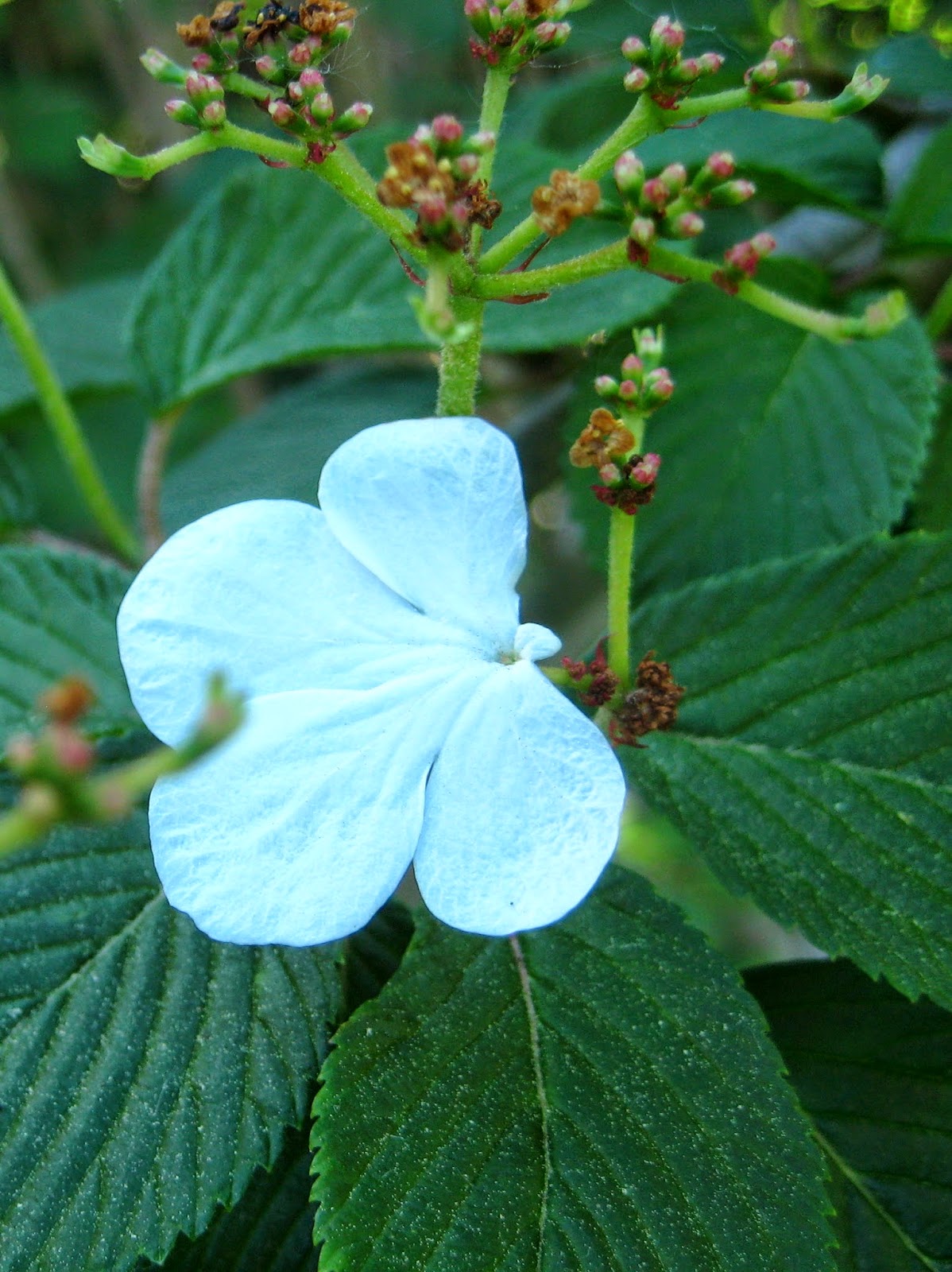
In this vein, I continue to discover and assess plantings beneath the overgrowth of NOLD, noticing a handful of different white blooms in our midst.
Bleeding Heart

Their shapes are varied.

Their shades of white cover the spectrum as well.
Trillium

Some I have identified.
Azalea

Some I still need to name.
Lily of the Valley

Nonetheless, the beauty of the white blooms needs no label.
Asian Pear

So, I work to restore many plants and bushes back to health.
Vibernum

And, I weed vigorously to control the invasive plants that threaten to smother out desirable vegetation.
Garlic Mustard -- Eradicate or, at a Minimum, Control

At the same time, I am embracing weeds that may deserve a more elevated place in the garden.
Dandelion -- Embrace Along with Clover 
Essential Sustenance to Monarchs Before Milkweed Blooms

I try to do an hour of work in the garden each day, weeding by hand -- no chemicals for me. A recent article in the New York Times highlights the perils of the use of pesticides, weedkillers, and synthetic fertilizers. I urge you to read it as well as a book I received as a gift from a dear friend, Bringing Nature Home: How You Can Sustain Wildlife with Native Plants by Douglas W. Tallamy for a thoughtful approach to the garden and the white flowers in your midst, too.

Saturday, May 31, 2014

Library

My parents just visited for a week from Wisconsin. As usual, they work miracles outside at NOLD, helping me slowly tame our overgrown property. I am extremely grateful.
In addition, my father made and installed a Little Free Library for my family and neighborhood to enjoy. I am going to cherish this gift. Little Free Library is a nonprofit that promotes literacy and community through free book exchanges set up worldwide.
Now, anyone can take a book and leave a book right at the curb of NOLD. In fact, a neighbor e-mailed to say that her daughter had discovered our Little Free Library and had borrowed two books the very first day. I hadn't even spread the word yet.
I have always had a secret longing to own an independent bookstore, because I love reading, am a huge advocate for education, and have a desire to run a business one day. No matter -- right now, our Little Free Library makes me terribly happy and is satisfying my itch for such a venture.
I am sure this summer will include plenty of trips to our county library as well as our Little Free Library just down the hill. Here's to a summer full of fun and reading!

A few years ago in elementary school, my younger daughter wrote this poem:

READING

Page by page
Words fly by
No pictures so I
Visualize

Monday, April 28, 2014

Haiku


I rely on two sources for my daily dose of news: The New York Times and NPR. Due to travel and study and family history, I am committed to staying engaged with the world at large and the events on the global as well as local stage that trickle down to impact each of us in ways both big and small. Just like voting, I think it is the responsibility of a citizen to stay informed. And, I have a deep and abiding respect for hard nosed and thorough journalism, essential to a healthy democracy, which both of these news agencies provide.

At times, however, I admit I do tune out for a week or two. The news is far too dire, my spirits fall, and I lose perspective: too much conflict, too much poverty, too much corruption. I need to find a bit of hope, a little laugh, some inspiration to step outside of the box. No surprise, my news sources often come to the rescue and didn't disappoint this time either.
In April, The New York Times sent out a call for haiku. What better way to celebrate spring than with some poetry! I love the way an artistic endeavor can inspire and lift one's soul. When I opened the newspaper on Sunday, I found just what I needed: thought-provoking and playful verse in the tradition of the 17 syllable Japanese poems. The haiku thawed my mood and inspired me to write one of my own:

write poetry first
when words and deeds seem feeble
for art must live on

Friday, April 4, 2014

Artisanal

If you peek under this meal you will find yourself in a number of other countries, immersed in other cuisines. As you look around your table—at which are seated, if you are lucky, congenial people from everywhere—you will realize the genius of American cooking and the secret of American life: a little bit of everything from everywhere put together to make something new and original. (128) More Home Cooking by Laurie Colwin
The New York Times ran an article this week on Laurie Colwin, author of Home Cooking and More Home Cooking. I am a proud owner of both works which combine recipes, memories, and kitchen anecdotes well ahead of the food revolution of the new millennium. Each reads as one is having an engaging conversation at the kitchen table with the author. Add them to your collection or gift them to someone else who will come to appreciate them as much as I do.

No matter how hard we work, we must also eat. To sit down with family and friends to a good meal is nourishing not only to the body but to the spirit. If our world is heartless, we must start somewhere. A bowl of soup and a piece of good bread provide a haven and help us get back that sense of a family dinner and a homemade meal. (142) More Home Cooking by Laurie Colwin
I am finally completing my small soup cookbook and was reminded by this article how Laurie Colwin's words resonate with me. So, I am wrapping up soup and returning to baking bread and remembering the far greater meaning I find in a well-prepared meal shared at a communal table and the authentic connections created by artisanal food.


Saturday, March 15, 2014

Yogurt

Despite a childhood in The Dairy State, I didn't grow up eating yogurt. I had to travel back to my roots as a college students in Germany before I fell in love with yogurt and muesli. Since then, I have made it a regular part of my diet as has my husband. Even my girls have eaten yogurt most days of their lives. We are a yogurt family.


So, it should come as no surprise that a few years ago, I bought a yogurt maker. I wanted to be able to control the quality of ingredients that went into my yogurt but quickly grew disillusioned. Every batch turned out quite tart, far too tart of this family. I tried to tweak the recipe but still found the final product required a fair bit of sugar to make it edible for us. This didn't seem like a very nutritious dietary outcome.


Last week, I resolved to try again. I was inspired by a new cookbook I enthusiastically recommend, Whole-Grain Mornings by Megan Gordon. I followed the recipe for Homemade Yogurt and couldn't be more pleased with the results. Not too tart, not too sweet, the yogurt is delicious, and I hope to add it to my weekly cooking regime.
 

Best of all, I made it with a tablespoon of homemade jam in the bottom of each jar as recommended by the author. Now, I have another use for the strawberry rhubarb sauce, grape jelly, vanilla amaretto pear preserves, and blueberry syrup I make each summer and store for the winter. Each of these works perfectly as a yogurt flavoring as does maple syrup. And, if you don't have a yogurt maker, don't worry. The "old-fashioned" method of making yogurt is also detailed.


Next week, I plan to make granola or muesli to go with the yogurt. I have a tried and true granola recipe, but I think I will turn to Whole-Grain Mornings again. It lists several interesting recipes and the outcomes are likely to be just as good as with the yogurt. Of course, you, dear reader, should feel free to share your standby recipes here as well. Granola, muesli, and yogurt combinations most welcome.